Acute vs Chronic Pathology (Progression)
Definition
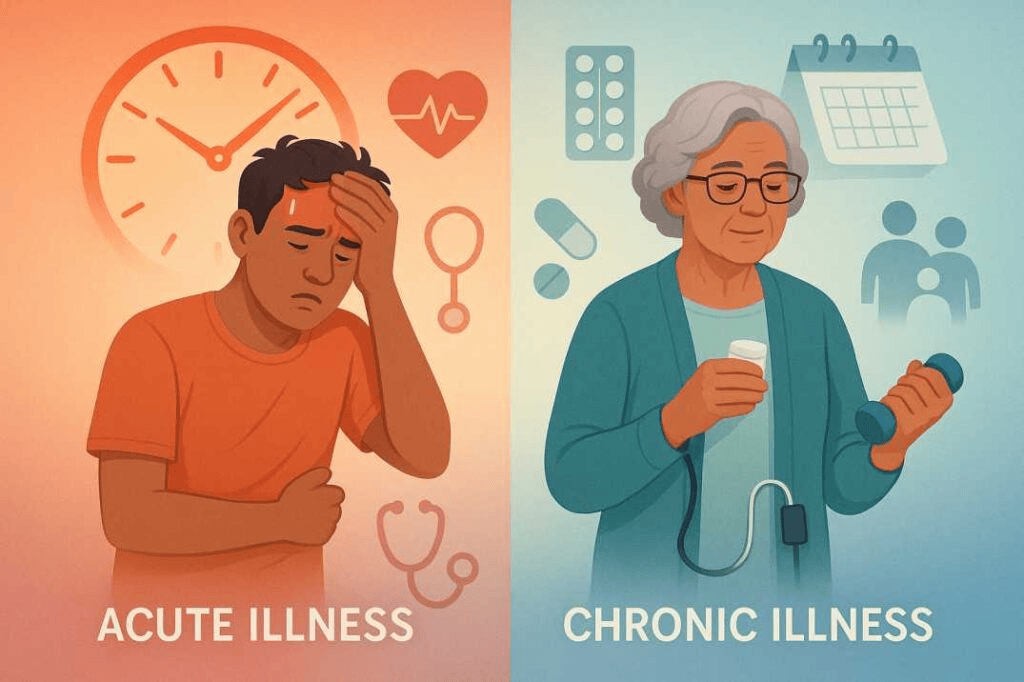
Determining whether the patient’s presentation is in keeping with a new acute pathology or representative of progression or decompensation of their underlying chronic diseases, frailty & multi-morbidity.
How to Apply
This is an extremely important framework – the vast majority of patients we see at the front door fit into the frail & multi-morbid category (which is on the rise). Hence, their acute presentation is seldom due to new pathology but simply reflective of their poor physiological reserve & progressive frailty.
The example I commonly use – if I caught pneumonia now, I would likely get better with some oral antibiotics from my GP. Fast forward 50 years and imagine I am 85 years old from a NH with vascular dementia, cerebrovascular disease, heart failure, IHD, CKD (hopefully not!) with the same pneumonia – I would have a high likelihood of being admitted to hospital (should I be?) septic with a high CURB-65 and mortality rate. Is the difference the pneumonia?
As such, instead of debating whether the sepsis came from their chest or urine or discussing the finer details of their hyponatraemia (with a 20 point plan) – we should focus our time & efforts on updating the patient / NOK of their frailty & trajectory and setting expectations in a compassionate manner with a pragmatic & holistic management approach. This is not therapeutic nihilism – its accurate clinical reasoning with heart!
 The Acute Mind